
1
We find the joint that stopped moving.
Skilled hands find the joint that stopped gliding and the tissue that stopped sliding. Then we teach your body to keep the motion we just gave it back.
What It Is
You are not someone who ignores a problem. You have stretched it, rolled on it, hung a heat pack on it and waited it out. Some restrictions do not answer to any of that. It is not a discipline problem. It is a mechanics problem.
Manual therapy is skilled hands on one specific restriction. Joint mobilization to bring the glide back. Soft tissue work to free what is stuck down. Nerve gliding when the nerve is the thing complaining.
The hands-on part buys you the motion. The exercise right after is what makes your body keep it, which is why it never travels alone here. Motion you gain and never use, you hand straight back. Our therapists sit down together every month to sharpen exactly this: joint mobilizations, neurodynamics, the skills that dull if nobody practices them.
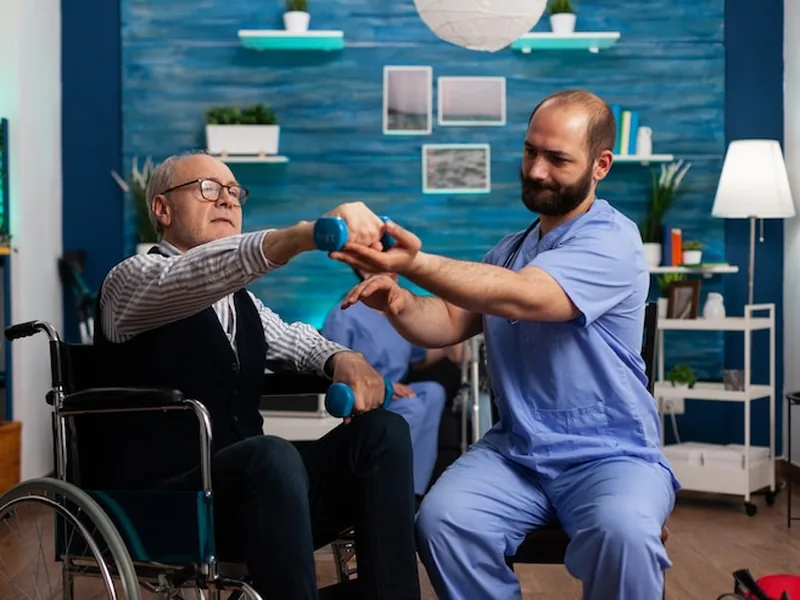 At a pressure you set
What It Helps
When a joint is stuck or tissue is guarding, hands often change things faster than exercise alone.
What A Session Looks Like
1
We find the joint that stopped moving.
2
Hands-on work, at a pressure you set.
3
You move on the new motion, same visit.
Why It Works
Turning your head the whole way to back out.
Mornings that need less warming up.
Reaching overhead without stopping halfway.
Motion that stays after you leave.
Pairs Well With
Questions, Answered
No. A massage treats a region and aims at how you feel. Manual therapy treats one restriction found in your evaluation and aims at how you move. Then you use the new motion in the same visit, because motion you never use is motion you hand back.
You set the pressure. Most people describe it as firm, sometimes tender where the tissue is guarded, and easier by the end. We tell you what we are about to do before we do it. One word from you and we back off, and that is not us being polite. Guarded tissue does not release.
No. Most of what we do is graded joint mobilization: slow, controlled pressure that restores glide without any sudden thrust. If a pop happens it is a side effect, never the goal. If you would rather we stay away from your neck entirely, say so and we will.
No. Connecticut has Direct Access, so you can start without a doctor referral. Some plans still ask for one, and we check that for you before your first visit so nothing stalls at the front desk.
Fewer than you might expect, because hands-on work is a door opener and not the whole plan. We use it to unlock motion, then spend the rest of the visit teaching your body to own it. You get a plan with an endpoint, in four phases: Pain, Prime, Perform, Prevent.
Manual therapy is part of your physical therapy visit, not a separate purchase. We run a free benefits check first and tell you in plain language what your plan covers and what it does not. Questions before then? Call us at (475) 209-1606.
Book Your Visit
Request a time and a real person calls you back, usually within two business hours. No phone tree. No ‘someone will reach out.’ Just a plan.
One therapist, one patient, every visit
Typical response: under 2 business hours
Step 1 of 5
That’s the hard part done. We’ll call during business hours to lock in your time.
Visit Us