
1
We look at your bone health, fracture history, and what already worries you.
A diagnosis of osteopenia or osteoporosis does not mean your body is too fragile to move. Progressive, individualized exercise, built around your bone health and fracture risk.
What It Is
A diagnosis of osteopenia or osteoporosis can feel overwhelming. You may wonder what exercises are safe, whether you can continue lifting weights, or how to stay active while protecting your bones.
Managing osteoporosis involves more than simply being told to exercise. Your program takes into account your individual history, bone health, fracture risk, strength, balance, movement patterns, activity level, and personal goals.
Having osteoporosis does not automatically mean you should avoid resistance training. When appropriately prescribed and progressed by a qualified physical therapist, resistance exercise can be an important part of an osteoporosis management program.
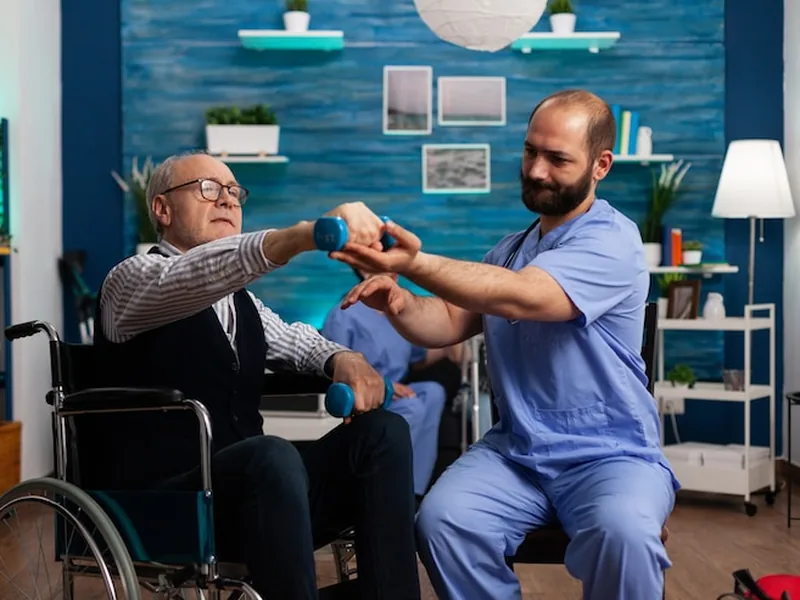 Always progressed at your pace
What It Helps
Bone loss rarely shows up alone. This is the care that usually goes with it.
What A Session Looks Like
1
We look at your bone health, fracture history, and what already worries you.
2
Progressive resistance and weight-bearing exercise, built to what you can handle today.
3
Education on safe movement and posture, so the plan still works once you are home.
Why It Works
Progressive resistance training, not a generic handout.
Fall-prevention and balance work built into the plan.
Education at every session, not just exercises.
A plan that grows as your strength and confidence do.
Pairs Well With
Questions, Answered
No. Having osteoporosis does not automatically mean you should avoid resistance training. When it is appropriately prescribed and progressed by a qualified physical therapist, resistance exercise can be an important part of an osteoporosis management program.
Completely. You do not need to have it all figured out before your first appointment. We will start where you are, answer your questions, teach you how to move and exercise appropriately, make modifications when needed, and gradually progress your program as your strength and confidence improve.
Your individual history, bone health, fracture risk, strength, balance, movement patterns, activity level, and personal goals. From there your program may include progressive resistance training, weight-bearing exercise, spinal stabilization and postural strengthening, balance and fall-prevention training, functional movement training, and mobility work modified to your fracture risk.
Education is part of every session. We take time to explain what you are doing, why you are doing it, and how it supports your goals, from safe movement and lifting strategies to posture, spinal mechanics, and fall prevention.
It depends on your plan. We run a free benefits check before your first visit and tell you in plain language what is covered and what is not. Questions before then? Call us at (475) 209-1606.
Book Your Visit
Request a time and a real person calls you back, usually within two business hours. No phone tree. No ‘someone will reach out.’ Just a plan.
One therapist, one patient, every visit
Typical response: under 2 business hours
Step 1 of 5
That’s the hard part done. We’ll call during business hours to lock in your time.
Visit Us