
From visit one
Pain
Protect and settle.
Shoulder pain, tightness and swelling get handled first, because a limb that hurts is a limb you will not use.
What We Treat
The hand that will not cooperate. The leg that needs telling twice. Rehab after a stroke is about teaching your body new routes to the same movement, one honest evaluation and one visit at a time.
Sound Familiar?
Two or more? Keep reading.
Why It Happens
A stroke interrupts blood flow to part of the brain, and the area it fed stops sending clear instructions. That is why the weakness sits on one side. It is also why an arm can be affected more than a leg, or balance more than strength. The muscle itself is usually fine. The message is the problem.
Brains build new routes around damaged tissue, and the way they do it is repetition. Specific movement, practiced often, in the right order. We cannot undo the damage, and we will never tell you we can. We can help you build new paths to walking, dressing and standing up on your own. You have spent your life being the one who handles things. Handling this one starts with a phone call.
The Honest Truth
Recovery after a stroke is not a race, and the window is not closed. Starting is the part that matters.
How We Fix It
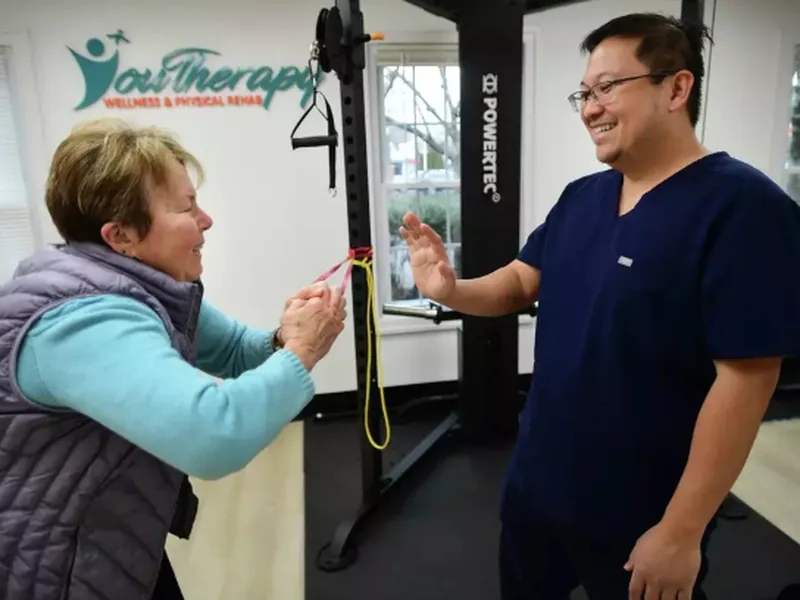
One therapist, one patient, every visit. Nobody is juggling you alongside two other people.
From visit one
Pain
Shoulder pain, tightness and swelling get handled first, because a limb that hurts is a limb you will not use.
Early on
Prime
Hands-on work and guided movement reclaim the motion that is available, before we start asking for strength.
As you build
Perform
Standing, walking, stairs, dressing. Real tasks repeated often, because repetition is what builds the new route.
Keeping it
Prevent
A home program and a fall risk plan keep the gains. Our occupational therapists can look at the house itself. That is the endpoint.
Quite unexpectedly, I experienced a stroke and have been going to YouTherapy for PT during my recovery. I have been working with Joanne and have been extremely pleased as she possesses a rare combination of being knowledgeable, professional and caring. She definitely challenges me appropriately while respecting my limitations.
Carole J. · Stroke
Questions, Answered
In Connecticut, no. Direct Access means you can see a licensed physical therapist without a doctor’s referral, including once you are discharged. We are glad to coordinate with your neurologist or physician. If you are the spouse or the adult child making this call, you can book on their behalf and come in with them.
Nobody can promise you a specific outcome, and we will not try. What is well established is that the brain keeps adapting, and that targeted repetition is what drives it. Our aim is better movement, better balance, and more of your day done by you. We will tell you plainly what we are seeing as we go.
Yes. Progress tends to be fastest early, but it does not stop at six months or at a year. Strength, balance and stiffness all still respond to training. Even where movement has plateaued, there is ground to be held that would otherwise be lost.
Stroke recovery does not fit a fixed number, so we will not invent one for you. You get a plan with an endpoint instead, built on the four phases: Pain, Prime, Perform and Prevent. You will always know which phase you are in and what we are working toward next.
We run a free benefits check before you commit to anything, so you know your out of pocket in advance rather than after. No guessing, and no bill you did not see coming. Ask us for the next opening and we will find you a time.
Book Your Visit
Request a time and a real person calls you back, usually within two business hours. No phone tree. No ‘someone will reach out.’ Just a plan.
One therapist, one patient, every visit
Typical response: under 2 business hours
Step 1 of 5
That’s the hard part done. We’ll call during business hours to lock in your time.
Visit Us